
Wednesday, August 26, 2026
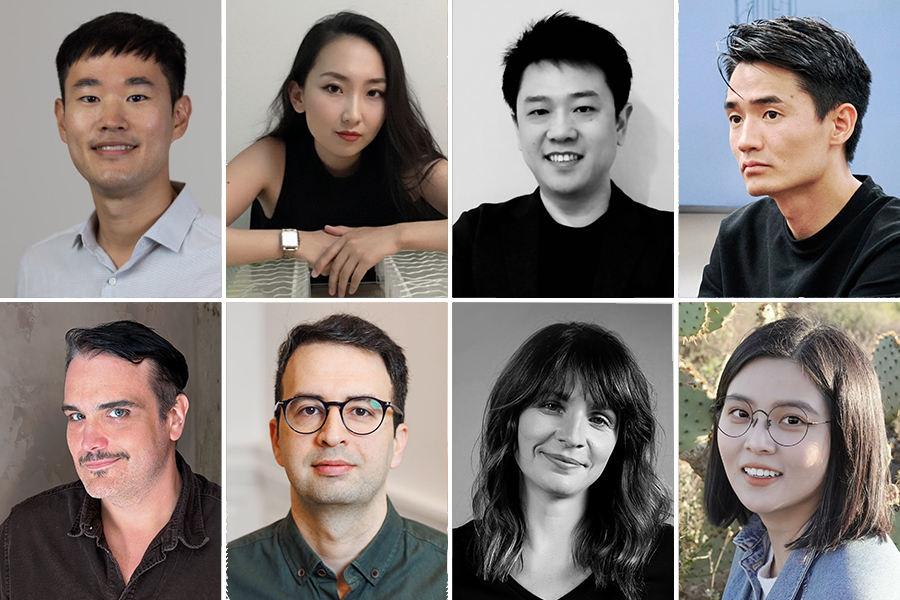
The University of Florida College of Design, Construction and Planning (DCP) will welcome eight new faculty members this fall and spring across the M.E. Rinker, Sr. School of Construction Management, School of Architecture, Department of Urban and Regional Planning, Department of Landscape Architecture and Department of Interior Design. The new faculty bring expertise in artificial intelligence, data analysis, tectonic ecologies, design computation, machine learning, transportation technologies, human-centered design and climate change adaptation, strengthening DCP’s research and advancing its long-term goals.
“We are delighted to welcome these outstanding faculty members to DCP,” Dean Chimay Anumba said. “They will considerably strengthen our teaching and research capabilities and enrich the educational experience of our students.”
New Faculty
In Bae Chung, Ph.D.
Assistant Professor
M.E. Rinker, Sr. School of Construction Management
Dr. Chung’s research focuses on improving project performance through data analytics, benchmarking, and risk-informed decision-making. His work advances collaborative risk management in construction projects by developing frameworks and methodologies that enhance how stakeholders collectively identify, assess, and quantify project risks. In addition, he has contributed to industry-wide efforts to evaluate the implementation of best practices and quantify their impact on project performance, enabling organizations to benchmark against peers and identify targeted areas for improvement.
Yvonne Gu
Assistant Professor
School of Architecture
Her work examines architecture as ecological infrastructure across scales, from building assemblies to neighborhoods and watersheds. Framed through “Tectonic Ecologies,” her research and creative practice investigate infrastructural modernity, alternative water ontologies, and biomaterial ecologies in architecture. She explores how structure, material, and building systems can mediate heat, air, moisture, light, and water while shaping everyday inhabitation.
Tzu-Chieh Kurt Hong, Ph.D.
Assistant Professor
School of Architecture
His work focuses on Computational Design, Generative Design, Rule-based Systems, and Digital Fabrication. In computation, his research includes Artificial Intelligence, Visual Computing, Visual Data Synthesis, Very-High-Level eXpressive Programming Languages (VHXL), and Very-Large-Scale Design Automation (VLSA).
Frederick Chando Kim
Assistant Professor
School of Architecture
His research focuses on the generative and analytical possibilities of machine learning in architectural form. He has conducted workshops at NYCU in Hsinchu, NUS, ETH Singapore, SUPSI in Mendrisio, and D-lab at Kyoto Institute of Technology. He co-leads Creative Data Critical Design with Mikhael Johanes, exploring innovative ways of using data for architectural and urban design approaches.
Michael A.N. Montilla
Assistant Professor
Department of Urban and Regional Planning
His research focuses on how emerging transportation technologies affect cities, urban transport, and planning/design processes. Much of ongoing work engages with questions regarding how public electric vehicle (EV) chargers can enable more sustainable forms of automobility in areas with limited residential parking, and how autonomous vehicle (AV) use is changing recurring travel costs, public data availability, and urban form. He also researches the local economic impacts of Brightline high-speed rail station development, and the changes to automobile use and ownership that followed the introduction of app-based ride-hailing.
Armin Mostafavi, Ph.D.
Assistant Professor
Department of Interior Design
He is a design researcher with a focus on human-centered design, investigating how designed environments shape human behavior, cognition, and well-being through psychophysiological measurements. His background includes academic research, teaching, and architectural practice across Europe and the United States, where he has engaged with human behavior, building performance, pre- and post-occupancy evaluation, and emerging technologies in both professional and educational settings.
Megan Weyland
Assistant Instructional Professor
School of Architecture
Weyland practiced in both Chicago and New Orleans where she managed projects of varied scales and typologies ranging from small-scale residential, high-rise mixed-use, institutional and commercial developments. During her tenure in New Orleans, Weyland also served as Director of Career Development for the Tulane School of Architecture Built Environment and taught courses in Professional Practice where she focused on bridging the gap between architectural practice and architectural academia through her practice and positions in local organizations.
Chendi Zhang
Assistant Professor
Department of Landscape Architecture
She is a researcher and designer in landscape architecture and urban planning. Her research focuses on aging in place, climate change adaptation including wildfire resilience, urban analytics, computational design, and the social and spatial dimensions of built environment design. She uses mixed methods, including geospatial analytics, computational design media, policy review, and comparative planning research, to examine how planning and design can promote equity, resilience, and quality of life across diverse contexts.