Archives: Faculties

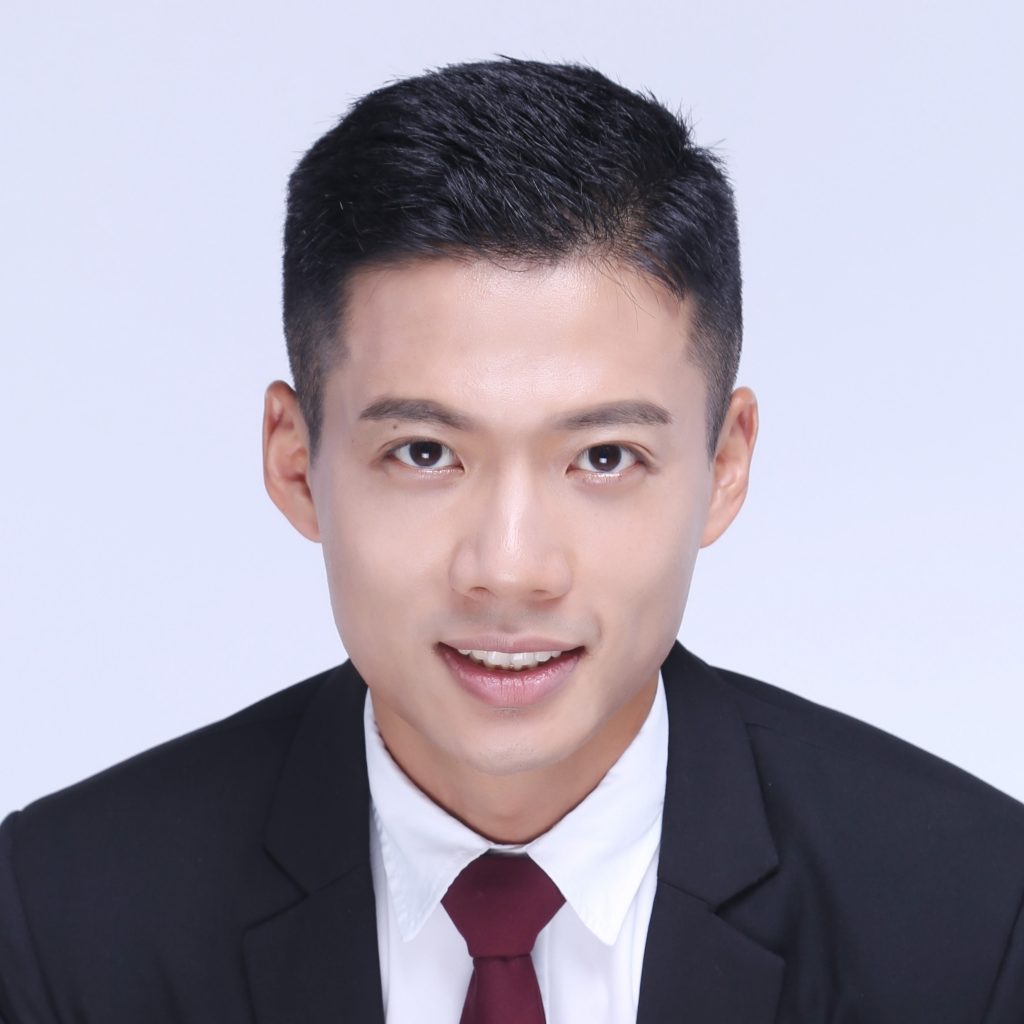
Jiayang Li

Jiayang Li

Department of Landscape Architecture, Florida Institute for Built Environment Resilience (FIBER)
Assistant Professor
AH 456

Dr. Jiayang Li is an interdisciplinary scholar working at the intersection of landscape design and climate change adaptation. Her research tackles the challenge of creating landscape change that makes communities more resilient and is welcomed by community members. Currently, Jiayang draws on social science theories and methods to study everyday landscape experiences and community perceptions of novel nature-based solutions. She has published in multiple top-ranked journals including Landscape and Urban Planning and given guest lectures and conferences presentations nationally and internationally. Jiayang earned her Ph.D. in Environment and Sustainability and Master of Landscape Architecture from the University of Michigan. She also holds a Bachelor of Engineering in Landscape Architecture from Tongji University in Shanghai, China. Before turning her primary focus to research, she had practiced in design firms including SmithGroup and AECOM.

Jiayang Li Read More »

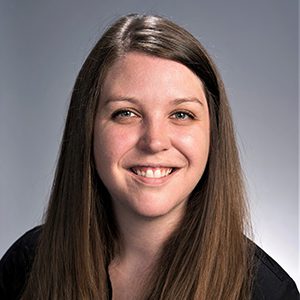
Shenhao Wang

Shenhao Wang

Department of Urban and Regional Planning
Assistant Professor
AH 434

• Massachusetts Institute of Technology (MIT), Ph.D. Computer and Urban Science,
• Massachusetts Institute of Technology (MIT), M.S. Transportation and Master City Planning,
• Peking University, B.A. Economics,
• Tsinghua University, B.A. Architecture and Law, Master in Architecture, 2012


Shenhao Wang is an assistant professor and the director of the Urban AI Laboratory at the University of Florida. He investigates three research themes in intelligent individual decisions, spatiotemporal urban dynamics, and computational urban justice. The first theme focuses on the individual decisions by integrating discrete choice models and deep learning with wide urban applications in the choice of travel modes, residential locations, and urban activities. The second theme treats cities as an interrelated system. By integrating network theory and deep learning, it quantifies the spatiotemporal dynamics between people and places, thus facilitating the design of resilient and sustainable urban systems. The third research theme focuses on the normative aspect of urban science by enhancing transparency, accountability, and fairness of the urban machine intelligence to achieve broad social impacts. With the theoretical innovations and practical impacts, the lab seeks to create a more sustainable, intelligent, and equitable urban future with artificial intelligence. His research has been funded by Department of Energy (DOE), Singapore-MIT Alliance for Research and Technology (SMART), and industrial partners. Dr. Wang completed his interdisciplinary Ph.D. in Computer and Urban Science at Massachusetts Institute of Technology in 2020. He received B.A. in Economics from Peking University (2014) and B.A. in architecture and law from Tsinghua University (2011), Master of Science in Transportation, and Master of City Planning from MIT (2017).

Research Areas
• Urban science
• Deep learning
• Choice modeling
• Urban mobility
• Network analysis

Links

  1. Urban AI Lab: http://urbanailab.com/
  2. Google Scholar: https://scholar.google.com/citations?user=01AmQ8wAAAAJ&hl=en

PUBLICATIONS
·      S. Wang, Q. Wang and J. Zhao*. “Deep neural networks for choice analysis: Extracting complete economic information for interpretation”, Transportation research part C: emerging technologies, 118: 102701
·      S. Wang and J. Zhao*. “Risk preference and adoption of autonomous vehicles.” Transportation Research Part A: Policy and Practice, 126, 215-229.
·      D. Zhuang, S. Wang*, H. Koutsopoulos, and J. Zhao, “Uncertainty quantification of sparse trip demand prediction with spatial-temporal graph neural networks”, (Proceedings of the 28th ACM SIGKDD International Conference on Knowledge Discovery & Data Mining)
·      S. Cranenburgh*, S. Wang, A. Vij, F. Pereira, and J. Walker, “Choice modeling in an age of machine learning – discussion paper”, (Journal of Choice Modeling: 100340)
·      Y. Zheng, S. Wang*, and J. Zhao, “Equality of opportunity in travel demand prediction with deep neural networks and discrete choice models”, Transportation Research Part C: Emerging Technologies. 132: 103410.

Shenhao Wang Read More »

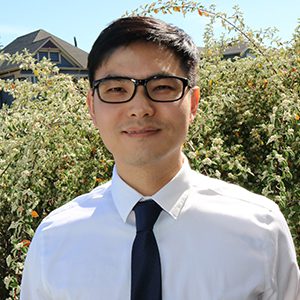
Maria Watson

Maria Watson

M.E. Rinker, Sr, School of Construction Management, Shimberg Center for Housing Studies
Assistant Professor
RINKER 320

Publications

Google Scholar

Biography

Maria Watson is an Assistant Professor in the M.E. Rinker, Sr, School of Construction Management and affiliated researcher with the Shimberg Center for Housing Studies. Before coming to the University of Florida, she was a Research Assistant Professor in the Department of Landscape Architecture and Urban Planning and Hazard Reduction Recovery Center at Texas A&M University. She has degrees in Urban Planning from The Ohio State University and Texas A&M University.

Dr. Watson’s research focuses on the factors impacting community recovery after disaster events, particularly interdependencies between infrastructure, housing, and businesses. She is particularly interested in the effectiveness of disaster programs and how these programs can be structured to better meet recovery needs. Watson has been a part of multiple interdisciplinary disaster recovery research efforts in Texas, Louisiana and North Carolina after Hurricanes Ike, Harvey, Matthew, Florence, Laura, and Delta. She has received grants from the National Science Foundation, National Oceanic and Atmospheric Administration, and Federal Emergency Management Agency for her research.

Dr. Watson has taught courses in quantitative methods, local government, and urban planning. She is currently co-teaching BCN-6585 Principles of Sustainable Development and Construction at the Rinker School.

Maria Watson Read More »

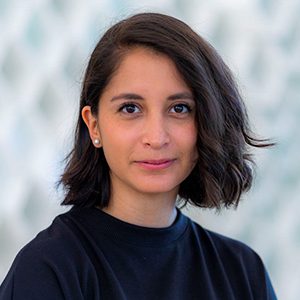
Chaofeng Wang

Chaofeng Wang

M.E. Rinker, Sr. School of Construction Management
Assistant Professor
352-273-0562
RINKER 342

Publications

Google Scholar

Biography

Dr. Wang joined the Rinker School as an Assistant Professor of Artificial Intelligence. Before that, he earned degrees in Engineering Mechanics and Civil Engineering from Central South University and Clemson University and worked as a postdoctoral scholar at University of California, Berkeley.

Affiliation

M.E. Rinker, Sr. School of Construction Management
Department of Civil and Coastal Engineering

Research Interests

Dr. Wang has broad interests in the intelligent automation of design, construction and management of next generation infrastructure systems, leveraging his expertise in computational mechanics, uncertainty and risk quantification, and AI. He focuses on developing advanced construction materials and pioneering autonomous construction technologies to revolutionize the construction industry. He also develops cyber infrastructure that leverages stochastic physics-based simulation, AI and data mining techniques for multi-scale modeling of the built and natural environment under chronic and acute stressors, which leads to informed decision-makings.

Teaching

Advanced Construction Technology
Additive Construction
Construction Mechanics
AI in Built Environment

Chaofeng Wang Read More »

Karla Saldaña Ochoa

Karla Saldaña Ochoa

School of Architecture
Assistant Professor
(352) 294-1453
AH 252

Karla is an Ecuadorian architect; with a Master of Advanced Studies in Landscape Architecture from ETH Zurich. In June 2021, she finished her Ph.D. at ETH Zurich, which investigated the integration of Artificial and Human Intelligence to have a precise and agile response to natural disasters. Since August 2021, Karla is an Assistant Professor in the School of Architecture at the University of Florida; her teaching and research focus on investigating the interplay of Artificial and Human Intelligence in architectural practices at building and urban scale. Karla is the leading researcher at SHARE Lab; a research group focused on developing human-centered AI projects focused on design practices.

Please visit SHARE Lab website if you want to know more or if you want to collaborate

www.ai-share-lab.com

Karla Saldaña Ochoa Read More »

Luis Mejia-Puig

Luis Mejia-Puig

Department of Interior Design
Assistant Professor
(352) 294-1431
AH 136

Areas of Research

The idea of delineating curricular advances in design education practices guides my research. I am interested in exploring how new digital media tools can positively affect the design process. The design process is an excellent example of creative thinking used to solve wicked problems present in all Social Sciences. Since the 1960s, research has focused on how the design process unfolds and the influence that traditional design tools have in that process. Physical manipulations through sketching and model making are critical elements in moving the design process forward. However, new digital tools are displacing these practices, and current design students are shifting their approach. This shift opens a gap, and the way we teach design must adapt to this new reality. To address this gap, I have focused my research on cognitive load theory. Through the combination of psychometric and physiological tools, I can analyze cognitive demand and cognitive workload quantitatively. Moreover, this approach transcends the boundaries of the design discipline and opens opportunities for multidisciplinary research.

What I Teach

I believe learning is a never-ending process, and as individuals, we should continue to learn for our whole lives. Like learning, design activity is a never-ending process where a designer’s final idea will be the starting point for another design. In my class, students will develop design proposals through collaborative teamwork. This approach allows students to experience firsthand the iterative aspect of design, the relevance of team collaboration, and understand design solutions as live outcomes to reimagine repeatedly. My teaching expertise of more than fifteen years with undergraduate design students relies on studio techniques. I believe design students learn through direct manipulation and master-apprentice guidance. At UF, I intend to enlighten students through my studio courses and mixed reality digital tools. Moreover, I hope my expertise in product development and background as an industrial designer can give Interior Design students a different approach to the design process.

My Educational Background

Originally from Colombia, I am an Industrial Designer with a Ph.D. from Oklahoma State University in Design, Housing and Merchandising, and a master’s degree in Design and Product Development in Barcelona, Spain. I have broad teaching experience with undergraduate|graduate design students, and over ten of those years, I was Head for the Industrial Design Program at a Colombian university. To fulfill my education and widen my professional development, I have moved from Colombia in South America to Spain in Europe and now to the United States. I believe my international background has been critical to developing my aesthetic sensibility and multicultural understanding. Like any discipline with high symbolic and interpretative attributes, design discipline is about exploring perspectives and re-shaping the world.

Luis Mejia-Puig Read More »

Cleary Larkin

Cleary Larkin

Historic Preservation Program
Assistant Professor, Department of Urban and Regional Planning // Director, Historic Preservation Program, Center for World Heritage Research & Stewardship, Preservation Institutes Nantucket (PIN) & St. Augustine (PISA)
(352) 294-1438
AH 148

For program or degree interest: HPinfo@dcp.ufl.edu

Cleary Larkin is an Assistant Professor in the Department of Urban & Regional Planning and Director of the Historic Preservation Program. Her coursework focuses on history and theory of historic preservation, historic preservation planning and policy, and the intersections of historic preservation with contemporary challenges such as climate change, social justice and affordable housing. Dr. Larkin’s research interests include interdisciplinary practice; historic land-use decisions as a source of inequity in communities; and the evolution of historic preservation as a discipline. Current research projects include Resilient Landscape and Building Adaptation of the DeMesa Sanchez House (PISA), Florida’s Green Book Sites, and multiple projects for PIN, including Heritage and Housing for Nantucket, Intangible Heritage at Risk, the West Monomoy/New Guinea neighborhood survey, and the Main Street Material History & Streetscapes Assessment.

Prior to her role as Director of UF’s Historic Preservation program, Dr. Larkin was Program Coordinator for the newly formed Florida Resilient Cities (FRC) program at UF’s Florida Institute for Built Environment Resilience (FIBER). The first FRC project focused on sustainable recovery and growth of Port St. Joe, a historic mill town in the Florida panhandle, damaged by Hurricane Michael in 2018. Dr. Larkin continues to work with the African American community in North Port St. Joe as they focus on community revitalization and resilience.

Cleary Larkin has over twenty years of practitioner experience as a licensed architect, historian and preservation planner. She has worked for Frazier Associates in Staunton, Virginia, Beyer Blinder Belle, Architects & Planners in New York City and as Historic Preservation Planner for the City of Gainesville, Florida. She is an advisory member of Gainesville Modern and sits on the Board of the Florida Trust for Historic Preservation. She holds a Bachelor of Architecture from the University of Arkansas, a Master of Science in Historic Preservation from Columbia University, and a Ph.D. with a concentration in Urban & Regional Planning from the University of Florida.

Cleary Larkin Read More »

Erik Finlay

Erik Finlay

Department of Urban and Regional Planning
Assistant Scholar, GeoPlan Center
352-392-8686
AH 131

Erik Finlay is an Assistant Scholar at the University of Florida GeoPlan Center. As an experienced geospatial professional, Erik supports research, teaching, and service at the Center. His research focuses on geospatial analysis, data management, and the development of decision-support tools for projects related to public health, transportation, and environmental and urban planning. 

Erik completed a Bachelor of Arts degree in Geography and Master of Public Health degree at the University of Florida, as well as a Certificate in Spatial Analysis for Public Health at Johns Hopkins University. With his background in GIS and public health, Erik serves as a key team member on health-related geospatial projects at the Center. This work has led to several successful collaborations with UF faculty in the health sciences.

Erik is also an instructor and program advisor for the Online Graduate Certificate in GIS for Urban and Regional Planners at the University of Florida. As lead instructor for URP6278: Web Mapping and Visualization, Erik teaches concepts, techniques, and software for sharing and displaying geographic information on the web. He is also guest instructor for URP6275: Intermediate Planning Information Systems, and earned a “UF 2019 Exemplary Online Award” for his contribution to the course. 

Erik Finlay Read More »

Sam Palmer

Sam Palmer

Department of Urban and Regional Planning
Assistant Scholar, GeoPlan Center
352-392-3246
AH 131

It is with great pleasure that we introduce Sam Palmer, an Assistant Scholar and full time faculty since 2017, at the University of Florida – GeoPlan Center. Sam joined the Center as a research assistant in 2000, then became a full time employee in 2003. He earned a BS in Environmental Science in 1999 then MA in Urban and Regional Planning in 2003, both degrees from the University of Florida. 

Sam is an experienced geospatial professional that supports research, teaching, and service at the Center. He assists the Center’s Principal Investigators in management of funded research projects using Geographic Information Systems (GIS). He works closely with faculty, researchers, project sponsors, and external organizations to identify and assess geospatial problems, develop solutions, and present recommendations for resolution. 

Sam’s work at the Center spans a variety of topics, such as:

  • Geospatial data development, quality assurance/quality control of geospatial data, schema development, optimization of database performance, import and backup of data, and creation of database code to facilitate work flows within the database.
  • Administration and maintenance of enterprise geospatial databases to support funded research projects.
  • Collection, organization, and analysis of demographic data from the United States Census Bureau.
  • Assisting with administration of the ESRI Campus Site License for the University GIS community, including communication with campus GIS users (faculty, staff, and students).
  • Develop curriculum and teach courses for the Online Graduate Certificate in Geographic Information Systems
  • Coordinate with public health researchers across campus to add demographic and geospatial expertise to their research projects.
  • Serve on the board for Florida Urban and Regional Information Systems (FLURISA) to coordinate and promote GIS activities around the State.

Sam Palmer Read More »

Adam Smith

Adam Smith

M.E. Rinker, Sr. School of Construction Management
Fire and Emergency Services Instructional Assistant Professor
352-273-1149
RINKER 203

Lecturer Adam A. Smith holds a BS and MS in Fire and Emergency Service Management from the University of Florida.  He began his educational journey obtaining a Fire Science Diploma at TiftArea Technical College before moving on to obtain his AAS in Fire Science Technology from Chattahoochee Technical College.  Adam holds national certifications as a Firefighter, Fire Officer, Paramedic, Hazardous Materials Technician, Public Safety Diver, and Instructor.  He holds State of Florida certification as a Paramedic, State of Georgia First Class Firefighter certification, State of Georgia certification as a Paramedic, and is a State of Georgia Smoke Diver.  Adam’s goal is to start working on his PhD in 2021.

Adam has worked in Fire and Emergency Service since 1986 until retiring in July of 2020 as a Lieutenant with Lumpkin County (GA) Emergency Services.  He began his career at the University of Florida as a Fire and Emergency Service (FES) Management Adjunct Lecturer, January of 2020.  He accepted a FES Management Lecturer position with UF, August of 2020.  Adam’s experience as a firefighter, paramedic, and Fire Officer allows him to pair his extensive real-life experience with the desire to instruct and inspire others in the FES career field as well as FES students at the University of Florida.

Lecturer Smith teaches the following FES Management courses at the Rinker School of Construction Management: Principles of FES Management, Community Risk Reduction, FES Administration, Personnel Management for Emergency Services, Public Information and Community Relations, Current Issues in FES, and Analytical Approaches to Fire Protection.  Adam guides the Emergency Management Internship program.  Adam is also tasked with helping guide students with submitting FES Undergraduate Honors Papers.

Adam Smith Read More »

Scroll to Top