
Planning by Example: A Conversation With Our Planner in Residence Elizabeth Abernethy
Elizabeth “Liz” Abernethy first came to the University of Florida’s Department of Urban and Regional Planning back in 1990. Back then, things looked a little different. Earl Starnes, the department’s first director, had just stepped down one year earlier, and the program was growing at a rapid pace, having achieved accreditation and established a strong cohort of faculty with extensive planning experience in the state of Florida.
After graduating with her Master’s in Urban and Regional Planning degree in 1993, Abernethy served as an urban planner with the City of Tampa through 2004, before moving into the private sector for 10 years, specializing in entitlement planning and working on various development projects throughout the Tampa Bay region.
In 2014, Abernethy decided to reenter the public sector, working with the City of St. Petersburg. She served as Chief Zoning Official and then Director of Planning and Development Services in 2018 before her retirement in May of 2025.
“What’s really unique and exciting about this role is that I’m able to draw from my experience in both the public and private sectors and then share that knowledge with students,” said Abernethy. “That way they can be sure they’re prepared for the challenges they’ll face during their career, no matter what realm of planning they’re in.”
A resident of St. Petersburg for over 30 years, Abernethy took the job of Chief Zoning Official with the city due to her specialty in zoning as a practice, a niche she gravitated towards during her studies, taking Dr. Ernest R. Bartley’s courses on growth management.
“My interest in zoning, code reform, and similar aspects of planning really started during my time at URP as a student,” said Abernethy. “So when the Chief Zoning Official position opened up I jumped at the opportunity.”
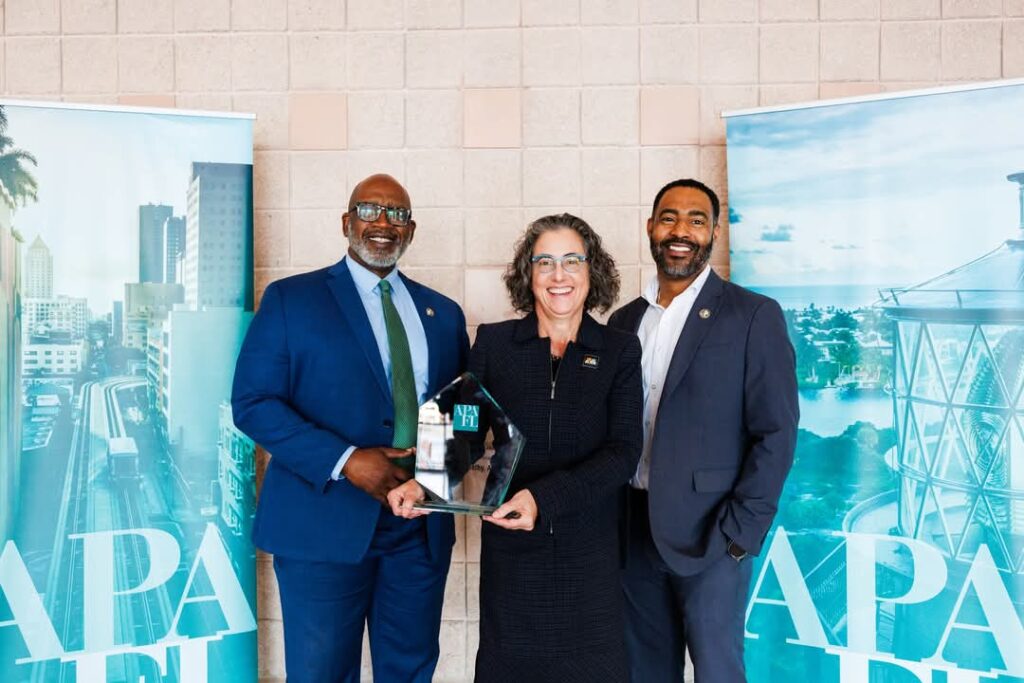
Abernethy receiving the APA Florida 2024 Public Official of the Year Award alongside Mayor Ken Welch and Planning and Development Services Administrator James Corbett at the 2024 APA FL Conference
A focus of her time with the City of St. Petersburg was on downtown revitalization. Working directly with the mayor and other city officials, Abernethy and her team focused on code reform that ensured the downtown area remained local in the face of a growing population and the displacement of local businesses.
“From a legal standpoint it was tough, because you can’t necessarily turn these larger chain businesses away and tell them they can’t use these spaces,” said Abernethy. “So what we did was implement what we called a storefront conservation overlay. We knew these larger chains wouldn’t be interested in smaller storefronts due to their business strategy, so by maintaining smaller spaces, we were able to maintain those opportunities for smaller businesses. These smaller storefronts were also more appealing from a pedestrian perspective and kept the charm of the downtown area intact.”
Abernethy also said these efforts, which oftentimes get challenged politically, were successful due to support from the city.
“An endeavor like that often faces significant resistance from those who are anti-regulation, so to be able to implement it with unanimous support was something you don’t see very often,” said Abernethy. “I was very fortunate to be able to practice in a community that wasn’t afraid to do something different and do what needed to be done to address the challenges of the community. And that’s very empowering as a practitioner.”
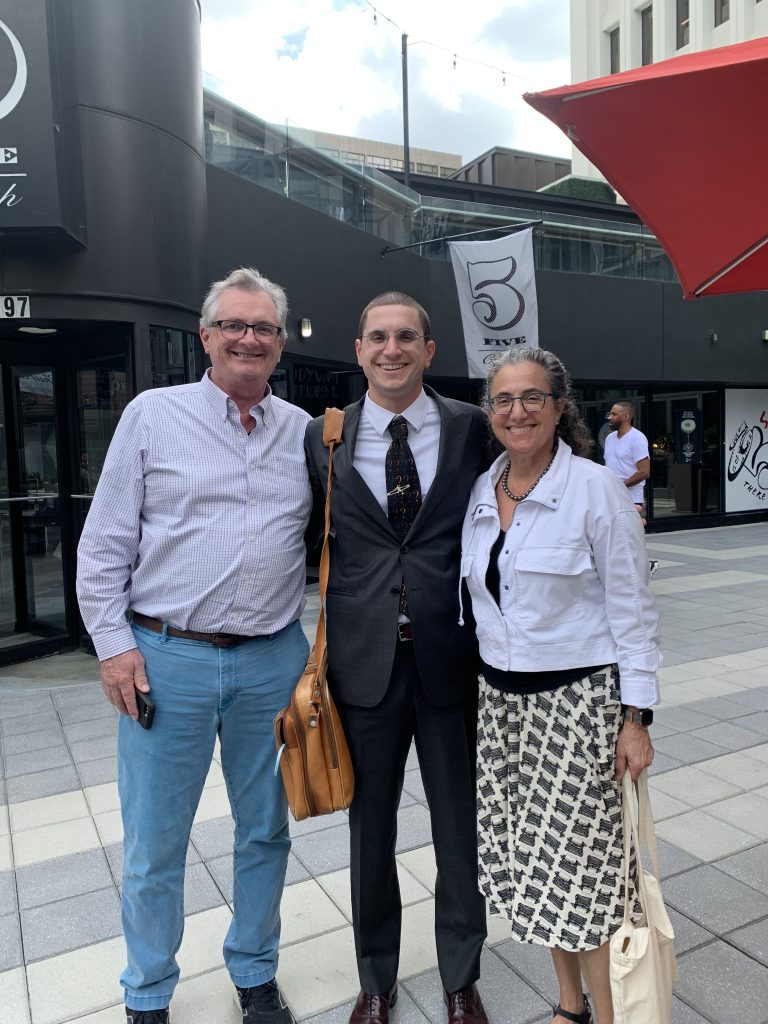
Abernethy with her husband Gary and her son Declan
When asked how she dealt with the various pressures from constituents, politicians, business owners and others, Abernethy said it all comes down to balance.
“Giving all the stakeholders the opportunity to be heard and to feel listened to is really the key,” said Abernethy. “While the outcome might not be exactly what one stakeholder wanted over another, it makes it much easier when they feel that their concerns have been heard and they can see that you’ve really tried to balance competing objectives to come up with the best solution. That’s when a planner knows they’ve done a good job.”
The challenge now for Abernethy is figuring out how to take her experience and the lessons she’s learned through her work and translate it for students. She’ll be teaching her first class, Planning Administration and Ethics, this spring.
“What I’m figuring out right now is how to ensure students are prepared for the area their career takes them to, whether it’s the public sector, federal, state, local, county, and what the different nuances are,” said Abernethy. “So I’m trying to figure out how to incorporate some of that into this class I’m teaching and how we work on those skills as classroom exercises.”
She’s also leading the colloquium, which serves as an introduction to the planning field and features a guest lecture series, bringing in practitioners from across the industry to share their experiences. Abernethy’s goal is for students to come out of the class knowing what to expect no matter what career route they take.
“One of the defining aspects of planning as a profession is its constant evolution and the need to manage change,” said Abernethy. “From the moment you begin your career to the day you retire, you’ll be called on to adapt, think creatively, and navigate increasingly complex challenges. Society changes, culture changes, people change. Our profession must continually evolve alongside that.”
Learn more about our new Planner in Residence here.