
From the Swamp to the Steel City: UF URP at ACSP 2026
Faculty and students from the University of Florida Department of Urban and Regional Planning (URP) traveled to Pittsburgh earlier this month for the 66th Annual Association of Collegiate Schools of Planning (ACSP) Conference. The conference brought together planning students and educators from across the country to discuss developments in the field, share research and collaborate on improving planning education. The Department also hosted an alumni reception and a career information session, giving faculty and students the chance to network with alumni and industry professionals.

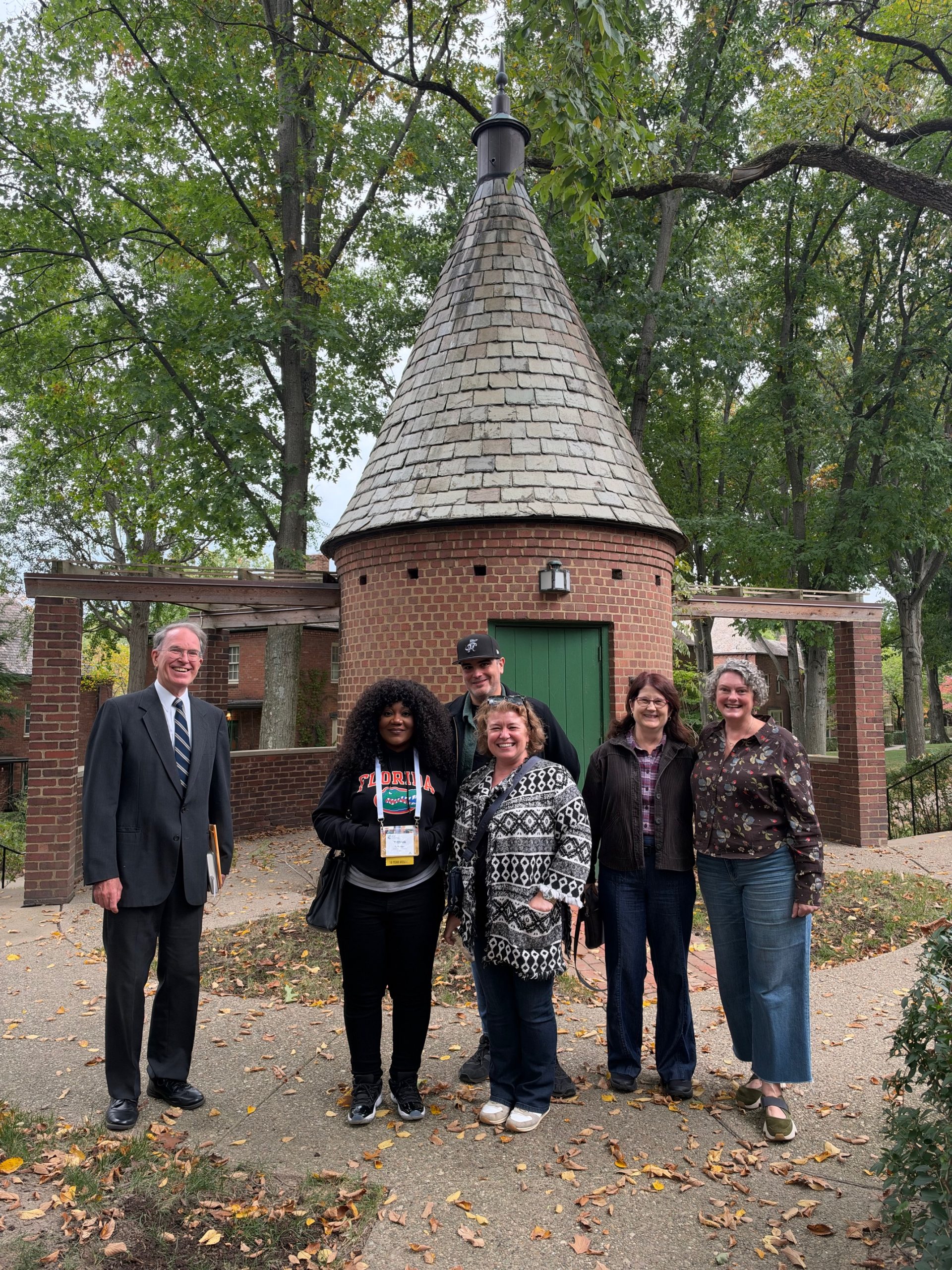
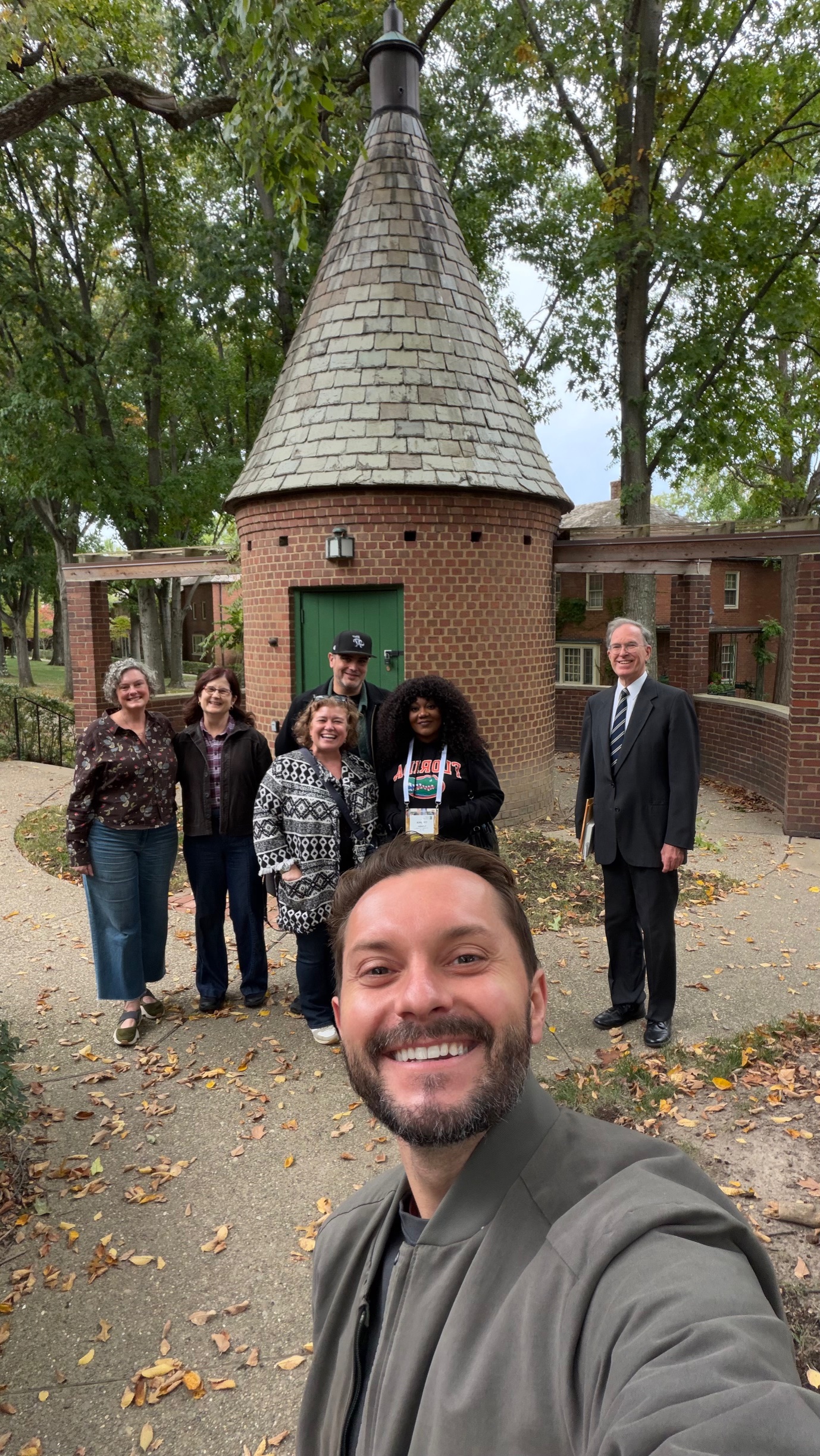
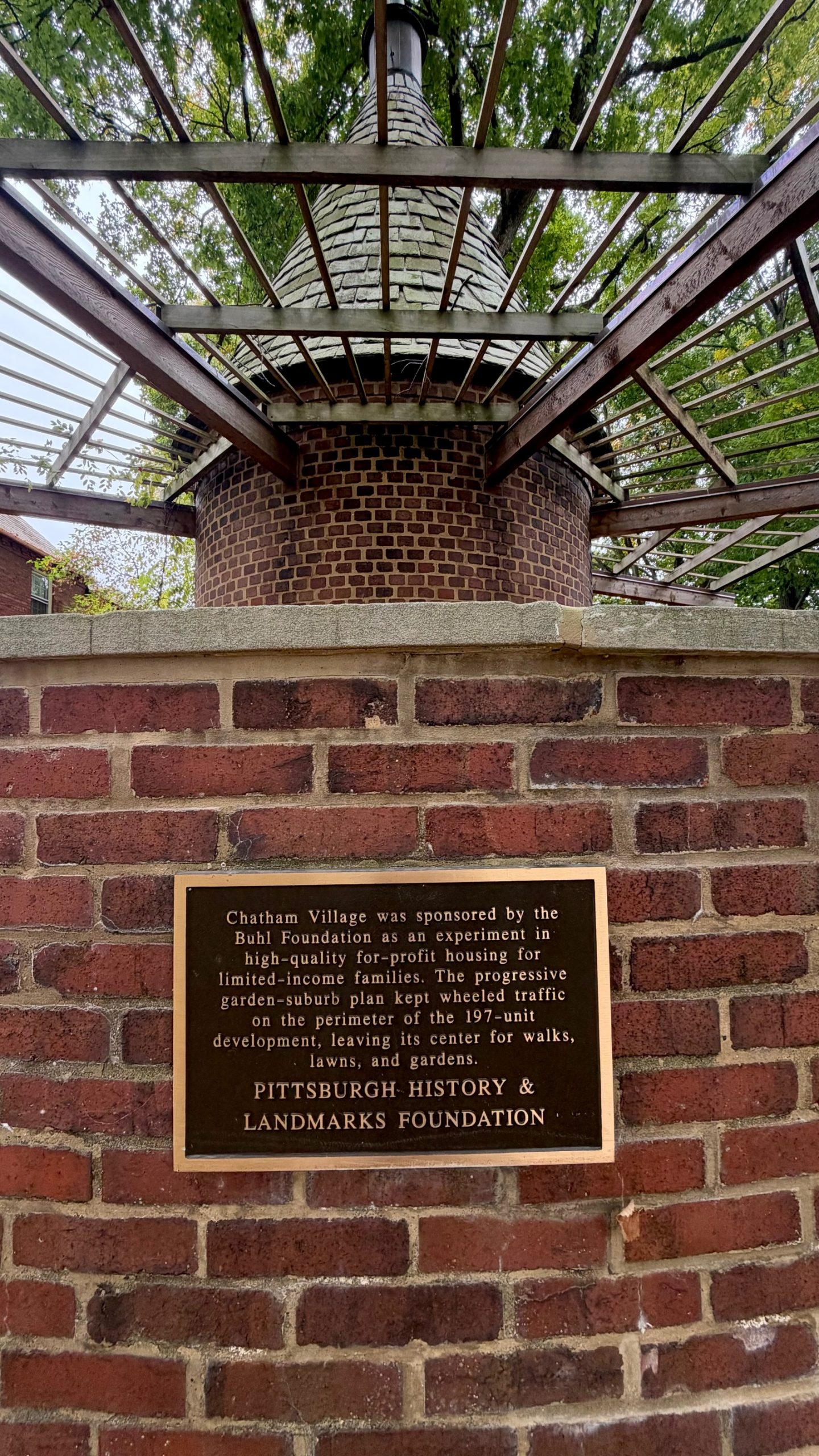
A highlight of the trip was a tour of the historic Chatham Village, organized by Dr. Kristin Larsen, FAICP. Designated a National Historic Landmark, the development remains a model of community design. Dr. Larsen was joined by Kyle Dost, AICP, Dr. Cleary Larkin, Dr. Michael A.N. Montilla, and alumna Dr. Tyeshia Redden.
URP faculty and students presented on topics ranging from planning career mobility, high-speed rail and transportation planning to online learning, artificial intelligence in the planning curriculum and cultural heritage in Florida. Highlights include:
- Dr. Kristin Larsen received the Margarita McCoy Award for the Advancement of Women in Planning from the ACSP Faculty Women’s Interest Group. The award recognizes significant contributions to the advancement of women in planning in higher education through service, teaching and research. Dr. Larsen was honored for her commitment to student success and her work expanding access to planning education, particularly her role in creating the MURP Online program. Since launching in 2012, the program has graduated 164 planners, including 98 women.

Dr. Kristin Larsen receives the Margarita McCoy Award for the Advancement of Women in Planning from the ACSP Faculty Women’s Interest Group at the 2026 ACSP Conference
- Dr. Cleary Larkin presented research on “Old Florida” and cultural heritage in the Gulf Coast region, examining the impacts of development across the state and the role communities play in shaping cultural identity. Co-authors were Dr. Kathryn Frank, Kyle Dost, and Dr. Nicholas Serrano.
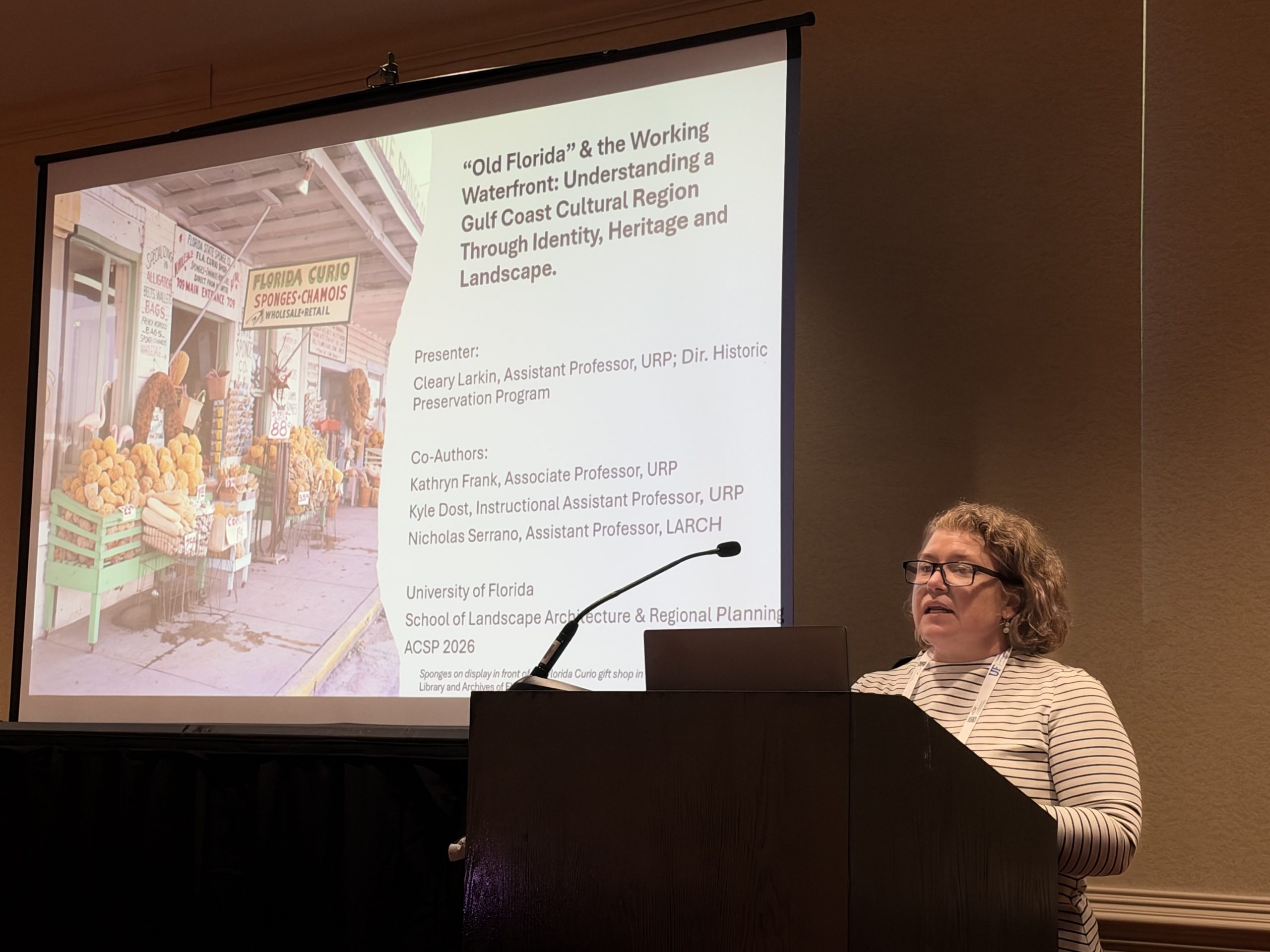
Dr. Cleary Larkin presents at the 2026 ACSP Conference
- Kyle Dost, AICP presented on online learning in urban planning, sharing data and lessons from the MURP Online program and the benefits of broader access to planning education.
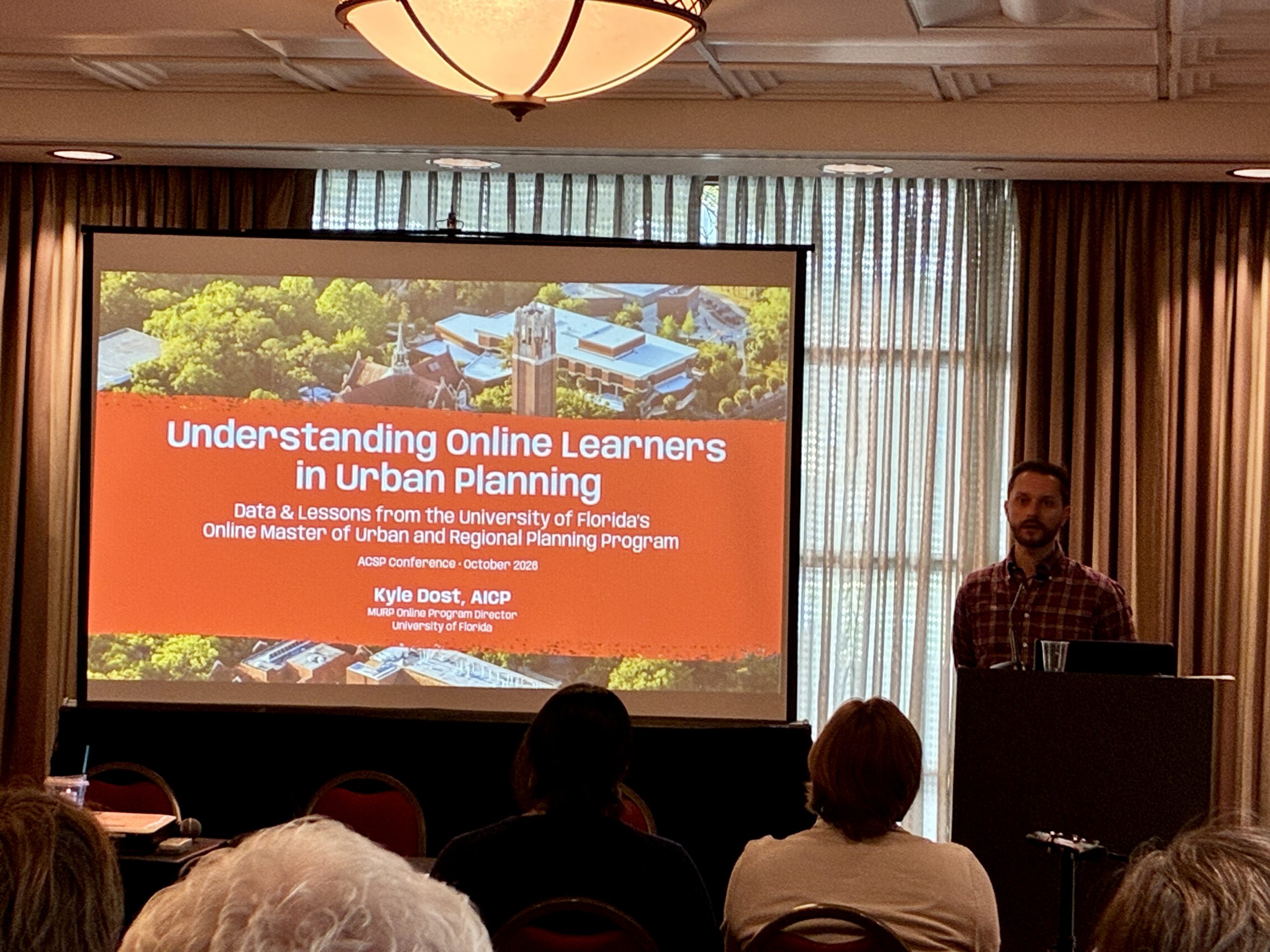
Kyle Dost, AICP, presents at the 2026 ACSP Conference
- Dr. Michael A.N. Montilla, URP’s newest faculty member, presented research on high-speed rail development, focusing on how Florida’s Brightline stations affect development and retail dynamics.
- Dr. Zhong-Ren Peng presented his research on AI governance in the planning curriculum. He serves as Co-Chair of the ACSP Urban Planning AI Task Force and as editor of its final report, “The Current State and Future of Artificial Intelligence in Planning Education, Research, and Practice.” The report, the culmination of more than two years of collaborative research, offers comprehensive recommendations for planning program directors, faculty, researchers and students.
- Dr. Ruth Steiner shared findings from a case study of transit-dependent populations in Gainesville, highlighting the importance of access and the effects of delay and displacement on those who rely on public transportation.
- Su Jeong Jo, Ph.D. student, presented research on planning career mobility using data from large language models. The paper, co-authored with Dr. Yan Wang, was recently published in the Journal of the American Planning Association (JAPA).
- Kaifa Lu, Ph.D. student, presented on state and local government capacity in disaster recovery, drawing on evidence from the Community Development Block Grant Disaster Recovery (CDBG-DR) program, a federal program that funds recovery in areas affected by natural disasters.
- Aysun Aygun Ogur, Ph.D., postdoctoral researcher, shared research on urban adaptation to heat stress and the role of public libraries in serving vulnerable populations. The work was co-authored with Dr. Emre Tepe.