
What is Urban Analytics?
Urban analytics incorporates data, spatial analysis, computing, visualization, and artificial intelligence to understand how cities function and to support better urban decision-making.
Study Complex Urban Systems
Use data to investigate patterns in mobility, land use, infrastructure, communities, and the built environment.
Build Technical Skills
Apply GIS, programming, data science, visualization, and machine learning to urban questions.
Support Urban Decisions
Translate analysis into evidence that can inform planning, policy, design, and public or private-sector decisions.
Why UF?
Urban planning expertise meets technical AI training.
Technical AI Coursework
Build AI and machine learning skills through technical courses in engineering, computing, and related fields.
Urban Context is Central
Address real urban challenges through planning coursework and a research project, with pathways tailored to your background.
Cross-department Learning
Learn from faculty across planning, engineering, computer science, and architecture.
Career Pathways
Urban analytics skills can support work in public agencies, consulting, planning and design firms, transportation, environmental planning, and data-focused roles.
Career Areas
- Urban Data & Analytics
- GIS & Geospatial Analysis
- Transportation & Mobility
- Planning & Policy Analytics
- Smart Cities & Urban Technology
- Data Science & AI
Job Titles
- Data Analyst
- City Planner
- Urban Designer
- Consultant
- Transportation Planner / Engineer
- Environmental Planner
Choose the Program That Fits Your Goals
UF currently offers both a full master’s degree and a graduate certificate in Urban Analytics.
M.S. in Urban Analytics
Designed to prepare students to use data, GIS, computing, visualization, and artificial intelligence to understand and address complex urban challenges.
Graduate Certificate in Urban Analytics
Designed for students across disciplines who want to strengthen their skills in urban data analysis, GIS, data science, and artificial intelligence.
What You’ll Learn
Build a balanced skill set that connects urban systems knowledge with spatial analysis, programming, visualization, and machine learning.
Urban Data & Analytics
Work with complex urban datasets and develop analytical approaches for interpreting patterns and change.
GIS & Spatial Analysis
Analyze, model, and visualize geographic patterns using geospatial methods and tools.
AI & Machine Learning
Apply machine learning and related computational methods to urban data and urban systems.
Urban Applications
Connect technical analysis with planning, transportation, land use, policy, and other urban applications.
Curriculum
Review the program structure here, then open the detailed course pages for course titles, credits, terms, policies, and model semester plans.
M.S. in Urban Analytics – 30 Credits
| Component | Credits | Overview |
|---|---|---|
| Required Core Courses | 18 | Urban data structures, planning foundations, introductory and intermediate urban analytics, and a 6-credit Master Research Project. |
| Elective Group 1: Urban and Regional Planning | 6 or 9 | Planning information systems, geospatial modeling, spatial analysis, transportation and land use modeling, and related urban methods. |
| Elective Group 2: Machine Learning | 6 or 9 | Machine learning, pattern recognition, intelligent systems, and related technical coursework across UF departments. |
| Total | 30 | The elective allocation depends on academic background and applicable waivers. |
Graduate Certificate – 15 Credits
Option A
9 credits of required core courses, plus 3 credits in Urban and Regional Planning Theory and Methods and 3 credits in Data and Computer Science.
Option B
6 credits of required core courses, plus 9 credits in Urban and Regional Planning Theory and Methods.
Admissions & Application
Review deadlines and expand the application requirements for the M.S. or Graduate Certificate.
MASTER OF SCIENCE
M.S. in Urban Analytics
Priority Application Deadlines
| Fall admission | January 15 |
| Spring admission | August 15 |
Applications submitted after the priority deadline may be considered on a case-by-case basis, subject to program policy.
Questions about your application?
Prof. Zhong-Ren Peng
Graduate Certificate
Graduate Certificate in Urban Analytics
Priority Application Deadlines
| Fall admission | March 1 |
| Spring admission | November 1 |
Applications are accepted on a rolling basis throughout the year.
Questions about your application?
Prof. Emre Tepe
Faculty & Research
Explore the Urban and Regional Planning faculty profiles below. The Electrical and Computer Engineering row currently shows a profile template; faculty details will be added once participation is confirmed.
Department of Urban and Regional Planning
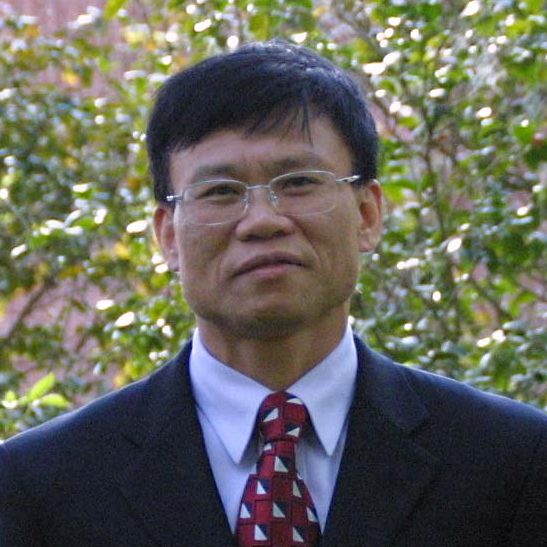
Zhong-Ren Peng
Professor; Director, International Center for Adaptation Planning and Design
Email: zpeng@ufl.edu
Urban Planning AI, transportation and land use, information technology for planning, climate adaptation, GIS, and sustainable urban systems.

Emre Tepe
Associate Professor
Email: emretepe@ufl.edu
Urban analytics, spatial econometrics, land use change, spatiotemporal modeling, machine learning, artificial intelligence, and big data.

Shenhao Wang
Assistant Professor; Director, Urban AI Laboratory
Email: shenhaowang@ufl.edu
Urban science, deep learning, choice modeling, urban mobility, network analysis, computational urban justice, and generative AI for planning.

Yan Wang
Associate Professor; Founder and Director, Urban Agility and Resilience Lab
Email: yanw@ufl.edu
Urban resilience, urban analytics, responsible AI, crisis informatics, spatial and infrastructure planning, and smart and connected communities.

Zhaoxi Zhang
Assistant Professor; Lead, U.TOP Lab
Email: zhang.zhaoxi@ufl.edu
Urban health sensing, participatory AI, human-computer-environment interaction, 3D simulation, urban robotics, and technology-forward urban design methods.

Vivian Wong
Assistant Professor
Email: vivian.wong@ufl.edu
Spatiotemporal analysis, machine learning, computer vision, human mobility, urban infrastructure, and simulation of operations and logistics.
Frequently Asked Questions
Common questions about academic background, curriculum pathways, applications, and career direction.