
Getting to Know UF Landscape’s Newest Faculty Member: Meet Assistant Professor Dr. Chendi Zhang

Blending technical skills with a strong research background, Dr. Chendi Zhang aims to bring new perspectives to the field of landscape architecture as the newest faculty member in the University of Florida Department of Landscape Architecture. With over 10 years of combined academic and professional experience in landscape architecture, Zhang specializes in climate resilience and adaptation, aging in place, urban analytics and computational design. She joined the department this fall and is teaching Advanced Digital Communication and Design Studio 3. She is also currently recruiting Ph.D. students and research assistants.

Unfold Luni River: Landscape design and site intervention.
Credit: Dr. Chendi Zhang.
Zhang previously worked as a landscape designer at OLIN, a renowned landscape architecture and urban design firm in Philadelphia. Driven by her passion for research and teaching, she pursued her Ph.D. at the University of California, Los Angeles, where she taught GIS and spatial data science and public affairs capstone courses. During her doctorate training, she also taught advanced digital media and architecture studio courses at San Bernardino Valley College. That combination of design and planning shapes her work today.
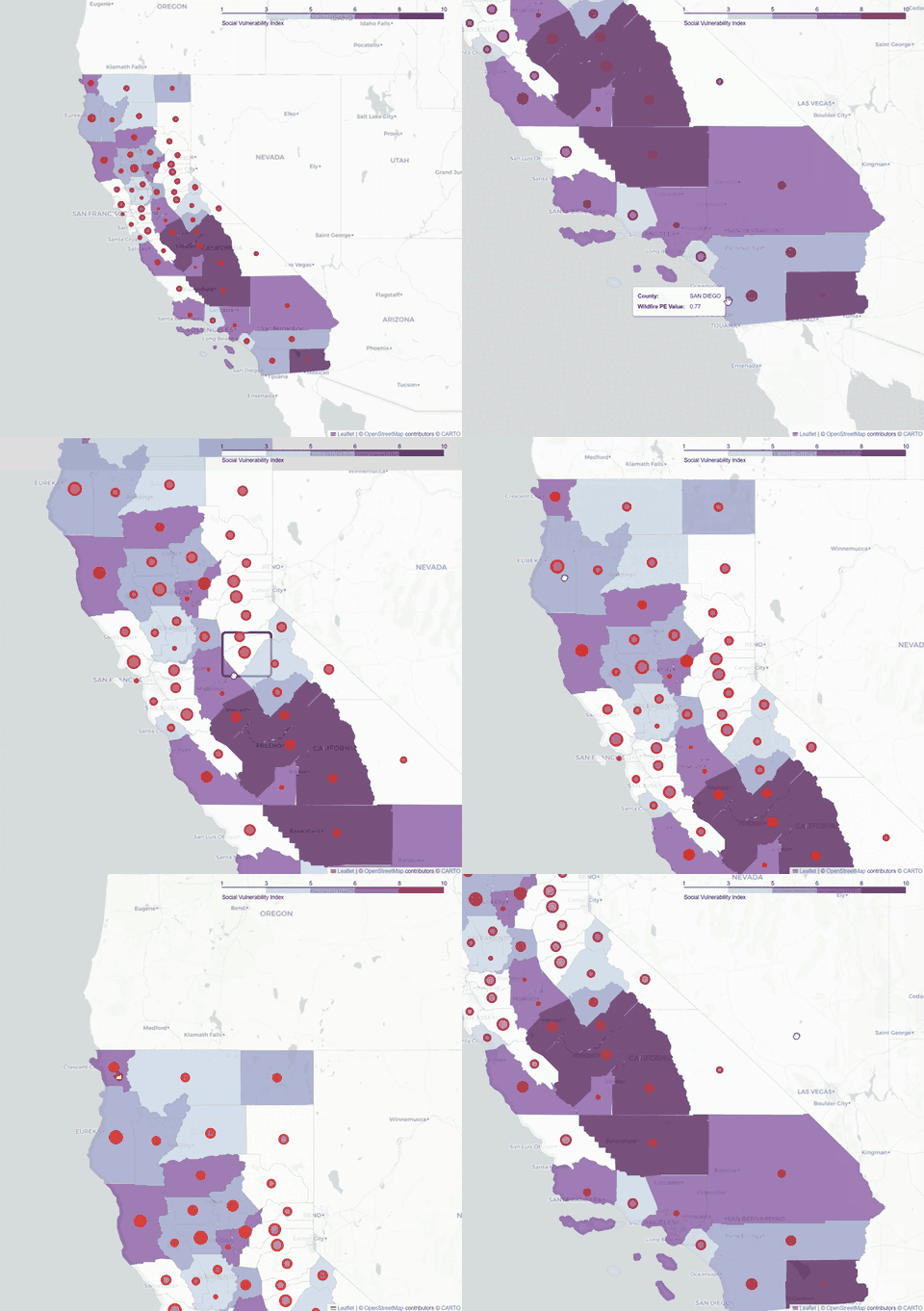
Assessment of wildfire plan effectiveness and its correlation with social vulnerability in California.
Credit: Dr. Chendi Zhang.
“I’m here to practice and bridge my expertise in landscape architecture, urban planning, and social science, continue expanding my research and introduce students to new paradigms and career opportunities in landscape architecture,” says Zhang.
In her first semester as a faculty member, she is already collaborating with colleagues in the UF College of Design, Construction and Planning and across campus, including those in public health and civil engineering and psychology, on projects related to aging in place and social vulnerability.
“Aging in place”, a cornerstone of Zhang’s research, refers to the ability to live safely and independently in one’s own home and community without the need for institutional care such as a nursing home. Making that possible depends on how neighborhoods are designed, how services are distributed and how easily people can reach the services and activities they need to thrive.
“It is cost-effective for both older adults and the government while minimizing the physical and psychological impacts of relocation on older adults,” Zhang explains. “It’s one of the ultimate solutions to the world’s aging crisis.”
The research is also personal. As part of the generation shaped by China’s one-child policy, Zhang now feels the pressure of caring for her own aging family members.
“Aging in place is more than just a research topic for me,” says Zhang. “I’m experiencing the need for it in my own life. I’m deeply grateful for all the love, support, and opportunities I received growing up as an only child. Now, it’s my turn to care for my parents, grandparents, and aunt and give back to them. My family is back in China, and I’m trying to balance my resources to help them as they age while ensuring they keep their quality of life. That spills over into my research, where I focus heavily on issues, strategies and solutions centered on aging as family size continues to decrease globally.”


Age-friendly neighborhood design in Chinatown, Downtown Los Angeles (left) and Aging in Place Measurement Framework (right).
Credit: Dr. Chendi Zhang.
When it comes to design, Zhang says designers hold a great deal of tacit knowledge, which can be difficult to communicate to broader audiences.
“I’ve always been interested in numbers, patterns, systems and underlying mechanisms as a way to deconstruct my knowledge of design and share it with the larger audience who are not in the design fields,” says Zhang.
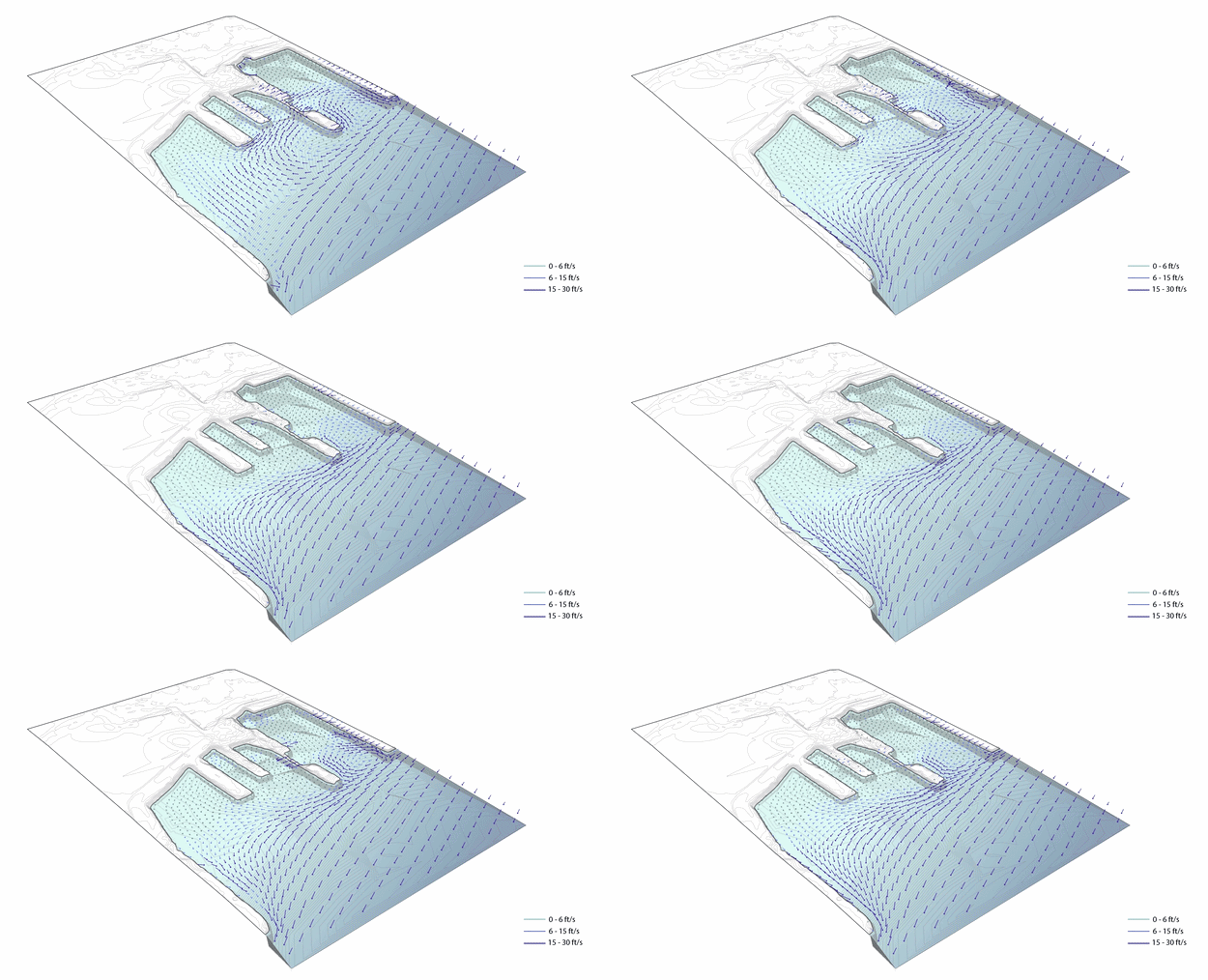
A 24-hour hydrodynamic simulation using the Surface-water Modeling System (SMS) and Grasshopper, visualizing water flow patterns, directions, and velocities around a proposed waterfront design.
Credit: Dr. Chendi Zhang.
This fascination with patterns and systems carries into two of her favorite hobbies, video games and Mahjong.

Dr. Zhang shows off her winning hand in mahjong.
Credit: Dr. Chendi Zhang
“I enjoy games because they bring us into different worlds where you bring nothing with you but your memories and openness to experience,” says Zhang. “I also see many similarities between game design and landscape architecture. Digital worlds are built in ways very similar to how we design spaces in the real world.”

In-game screenshot from Black Myth: Wukong.
Credit: Dr. Chendi Zhang.
As she continues to familiarize herself with the department and the wider UF community, Zhang encourages students to reach out for guidance on class projects or independent research.
“I encourage students to be proactive in seeking out assistance and to ask questions about topics they’re interested in or projects they’re working on,” says Zhang. “I want to share my knowledge with the next generation and give them the same level of mentorship my professors gave me when I was a student.”
