
URBAN FUTURES
Small Deserves More
Urban Futures supports small cities in identifying challenges, strengthening local capacity, and exploring future development opportunities. Through research, collaboration, and technical support, the program connects local governments, university researchers, and institutional partners to advance more resilient, informed, and place-based urban strategies
PROGRAM
SUPPORT
We create spaces for dialogue among small cities, researchers, and agencies to share challenges, exchange knowledge, and build long-term relationships
DESIGN
We provide access to research-based tools such as spatial analysis and city case studies to help cities understand local conditions and define future strategies
OUTREACH
We connect local governments with academic and institutional who can support planning, funding, and implementation opportunities
AREAS OF WORK
Urban Futures focuses on small cities experiencing different forms of transition, including:
- Redevelopment and land-use challenges
- Opportunity Zones development
- Infrastructure and environmental resilience
- Housing, mobility, and public space needs
- Revitalization and community identity
- Local capacity and planning resources
Our approach is to examine how small cities respond to growth, redevelopment pressures, infrastructure limitations, environmental risks, and changing economic conditions. Rather than applying a single one-solution-fits all model, Urban Futures works with each city’s specific context to understand its challenges, assets, and possible futures.
IMPACTS
For Local Governments: Urban Futures provides research support, spatial data, and planning resources that can help cities communicate needs, identify priorities, and pursue future opportunities.
For Communities: Urban Futures highlights local challenges and assets, supporting more informed conversations about growth, resilience, and development.
For Students and Researchers: Urban Futures creates an applied research environment where students and faculty engage directly with real urban issues affecting Florida’s small cities.
For Partners: Urban Futures creates a platform for collaboration between universities, municipalities, agencies, and funding or technical assistance organizations.
EDITIONS
Urban Futures is developed through annual editions that focus on specific communities, themes, and regional challenges. Each edition brings together participating cities, researchers, students, and partners through a structured process of analysis, dialogue, and capacity building.
2025

Participating Cities
Town of Micanopy
City of Crystal River
City of St. Pete Beach
City of Perry
2026

Participating Cities
City of St. Marks
City of Madison
City of White Springs
City of Willingston
City of Zephyrhills
City of Lake Helen
LEADS

Carla Brisotto
Design Lead, Florida Institute for Built Environment Resilience; Assistant Professor, School of Architecture
c.brisotto@ufl.edu
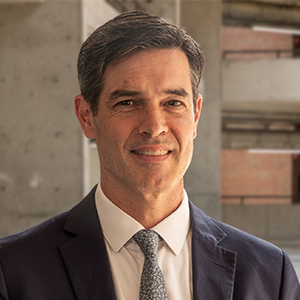
Jeff Carney
Director, Florida Institute for Built Environment Resilience; Professor, School of Architecture
j.carney@ufl.edu
COLLABORATORS
Evelyn Calle, Research Assistant, School of Architecture
Jason von Meding, Communication Lead, Florida Institute for Built Environment Resilience; Professor, Rinker School
Eban Bean, Associate Professor IFAS, Urban Water Resources Engineering
Ryan Klein, Assistant Professor IFAS, Arboriculture
Basil Iannone, Associate Professor IFAS, State Extension Specialist, Urban and Residential Landscape Ecology
Mike Volk, Research Associate Professor, Associate Director, Center for
Landscape Conservation Planning
Isabella Guttuso Browne, Urban and Recreational Green Infrastructure Coordinator, Center for Landscape Conservation Planning
Andrea Galinski, Education Lead, Florida Institute for Built Environment Resilience; Assistant Professor, School of Landscape Architecture
Patricia Kio, Assistant Professor, Architecture and Sustainability and the Built Environment Program
Abhinav Alakshendra, Associate Professor and Director, Center for International Design and Planning
Hassan Azad, Assistant Professor Acoustic, School of Architecture
Stephen Bender, Instructional Associate Professor, Program Director, CityLab Orlando
Christian Calle, Assistant Scholar FIBER