
Cedar Key ShOREs

About
Cedar Key
Located on the western coast of Florida below the panhandle, Cedar Key is a low-lying barrier island with a population of approximately 800 full-time residents. That number has been dwindling as the area experiences increasing flooding as rising seas, strong storm surge, and recent hurricanes have caused extensive damage to shorelines and the community.
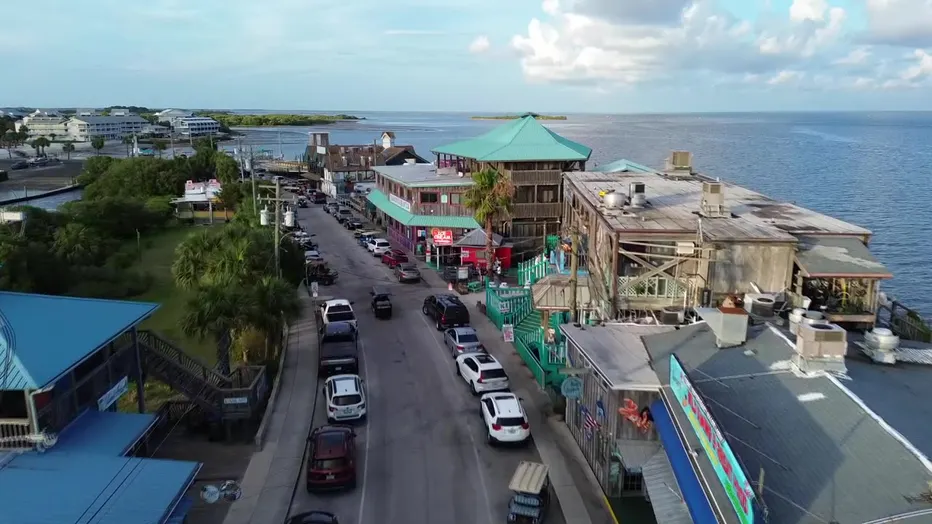
The reality of living with hurricanes is painted starkly across the town. Storefronts bear spraypainted boards marking the businesses they once housed or pointing would-be patrons to new locations. Signage on the main street marks the historic highwater lines for storms that have hit the island. The highest of these was Hurricane Helene in 2024 with a maximum storm surge of eight to twelve feet, high enough to inundate most of the island. Media reports indicate that about 25 percent of the homes in Cedar Key were destroyed during Helene, along with numerous businesses. While the scars of recent hurricanes remain visible, Cedar Key residents are working toward a more resilient future.
Mission
Dr. Savanna Barry and her team at the University of Florida are partnering with the Cedar Key community to design nature-based solutions to address flooding risks and mitigate climate-related hazards through a project funded by the Gulf Research Program (GRP). Nature-based solutions use and restore natural and modified ecosystems to help communities manage flooding and other hazards, benefiting both people and nature.

Areas of Impact
For coastal communities, that often looks like living shorelines. Instead of building concrete seawalls, living shorelines use natural materials—such as plants, rocks, and oyster shells—to stabilize the coast. These natural materials provide additional environmental benefits such as creating habitat for fish and wildlife, filtering runoff, reducing erosion, and storing carbon. Previous collaborations between the community and the University of Florida focused on living shorelines and sparked the city’s interest in further applications of nature-based solutions to protect vulnerable public infrastructure threatened by sea level rise, frequent storms, and chronic erosion.
Project Focus
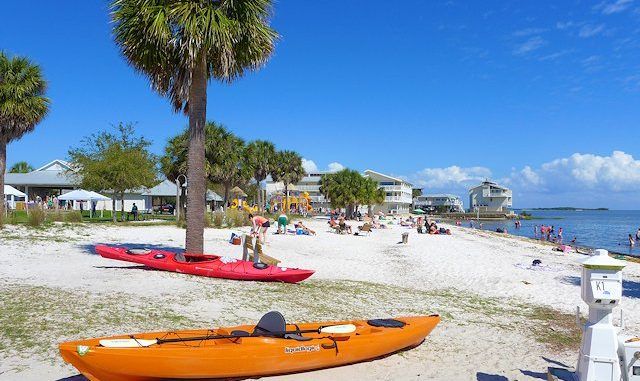
Dr. Barry’s project focused on an area that encompasses critical routes for emergency services, a popular shore fishing spot, a public school, private homes, local businesses, and failing stormwater infrastructure. For former mayor Sue Colson, the project represents a tangible way to protect her community. “The first time I got value out of this project was from the very first workshop,” said Sue Colson, who stepped down as mayor of Cedar Key in April 2025. “For me, it’s all about implementation.”
From the start, the project aimed to create designs tailored to Cedar Key, shaped by input from its residents. In the initial phase of the project, Barry and her team held a series of stakeholder-driven workshops and surveys, conducted site visits to inform design possibilities, and integrated technical expertise with local preferences, infrastructure needs, and equity considerations. After six months of iteration and incorporating community feedback, the planning phase resulted in community-vetted conceptual designs for a hybrid living shoreline – a design that combines natural features like oyster reefs with engineered elements such as rain gardens, sea groins, and permeable pavements.
Team

Savanna Barry
Principal Investigator

Carla Brisotto
Co – Principal Investigator