
Climate Adaptation and Resilience
We assess the vulnerability of communities and infrastructure to sea-level rise, hurricanes, extreme precipitation, and other climate hazards. We develop practical strategies for climate action, land-use planning, managed relocation, and long-term community resilience.

Concept of Climate Adaptation and Resilience
Climate Adaptation and Resilience focuses on assessing the vulnerability of communities and infrastructure to climate hazards such as sea-level rise, hurricanes, and extreme precipitation, and on developing practical strategies to plan for those risks.
This field has expanded significantly as coastal cities face mounting climate pressures. Current research spans vulnerability assessment, land-use and relocation planning, infrastructure resilience, and increasingly, how to bring local governments, residents, and institutions like insurers into the adaptation process together, rather than treating adaptation as a purely technical exercise.
Key Questions We Aim to Answer
How vulnerable are coastal communities and infrastructure to sea-level rise, and how does that vulnerability vary across neighborhoods and regions?
How will land use and population patterns shift as communities respond to flooding and sea-level rise, including through planned or managed retreat?
How can local governments, residents, and insurance systems collaborate to support more effective coastal adaptation?
How resilient is transportation and other critical infrastructure to sea-level rise and flooding, and how can that resilience be improved?
Featured Research

Planning for hydrologic and ecological impacts of sea-level rise on the sustainability of coastal water resources
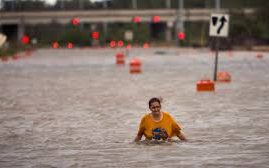
A Parameterized Climate Change Projection Model for Hurricane Flooding, Wave Action, Economic Damages, and Population Dynamics
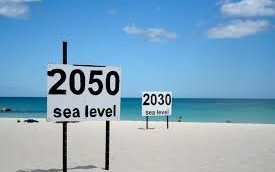
Development of Sea Level Rise Adaptation Planning Procedures and Tools Using NOAA Sea Level Rise Impacts Viewer
Selected Publications
Fu, X., & Peng, Z. R. (2019). Assessing the sea-level rise vulnerability in coastal communities: A case study in the Tampa Bay Region, US. Cities, 88, 144-154. https://doi.org/10.1016/j.cities.2018.10.007
Han, Y., Chen, C., Peng, Z. R., & Mozumder, P. (2021). Evaluating impacts of coastal flooding on the transportation system using an activity-based travel demand model: a case study in Miami-Dade County, FL. Transportation, 1-22. https://doi.org/10.1007/s11116-021-10172-w
Han, Y., Ash, K., Mao, L., & Peng, Z. R. (2020). An agent-based model for community flood adaptation under uncertain sea-level rise. Climatic Change, 1-20. https://doi.org/10.1007/s10584-020-02802-6
Song, J., Fu, X., Wang, R., Peng, Z. R., & Gu, Z. (2018). Does planned retreat matter? Investigating land use change under the impacts of flooding induced by sea level rise. Mitigation and Adaptation Strategies for Global Change, 23(5), 703-733. https://doi.org/10.1007/s11027-017-9756-x
Fu, X., Gomaa, M., Deng, Y., & Peng, Z. R. (2017). Adaptation planning for sea level rise: a study of US coastal cities. Journal of Environmental Planning and Management, 60(2), 249-265. https://doi.org/10.1080/09640568.2016.1151771
Wang, H. W., Peng, Z. R., Wang, D., Meng, Y., Wu, T., Sun, W., & Lu, Q. C. (2020). Evaluation and prediction of transportation resilience under extreme weather events: A diffusion graph convolutional approach. Transportation Research Part C: Emerging Technologies, 115, 102619. https://doi.org/10.1016/j.trc.2020.102619